
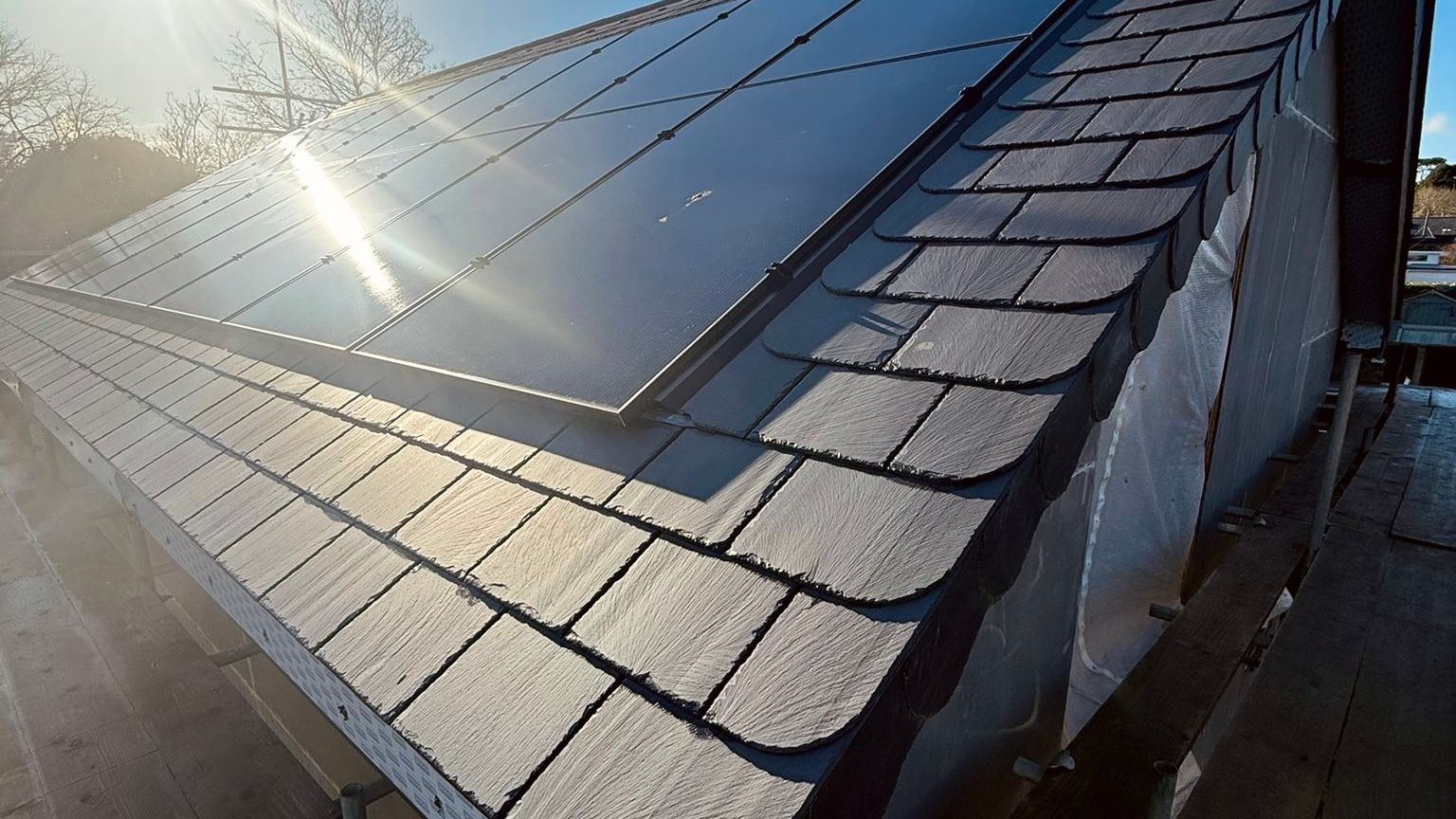


We were invited to specify the materials for this project, and we recommended the installation of the Canadian Glendyne slate. The existing specification had proposed a Brazilian slate, which we felt was not the right choice for a roof carrying this level of detail. Given the complexity, scale, and craft involved, the Glendyne offered a far more suitable balance of quality, consistency, and finish.
From the outset, this was a particularly engaging project. We were given a great deal of artistic licence with the design, and our concepts were fully embraced by the clients, allowing our ideas to move seamlessly from sketch to reality.
One of the standout features is the completely new ranger course that we designed specifically with our clients for this roof. Traditionally, these areas would incorporate decorative timber barge boards; instead, we chose to cloak the verges entirely in slate. This resulted in a layered slate detail which introduces depth, texture and a striking play of shadow, especially under changing light conditions. We've called them 'teapots'.
At the rear, the dormer presented another opportunity for creative freedom. With full reign over its design, we developed a pattern that balanced precision with expression. Our clients, one an engineer and the other a creative, naturally inspired this approach. Clean, straight lines are deliberately interrupted by a curved slate motif, forming a tally-slash curve that transitions into a refined side-lap slate system of double ranger courses beneath an additional layer of our 'teapot' rangers at the gable, creating a rhythm and hierarchy across the elevation.
Beyond the slatework, several bespoke lead elements truly set this roof apart. The cloaked ridge ends were fabricated from cast lead, produced in-house. In a more personal touch, we also hand-crafted a tortoise and a hare to represent the clients themselves. These were first modelled in clay to the exact scale required, then sand-cast to create negative moulds. Using recycled lead, we cast the final pieces and welded them into position on the roof.
There are countless areas across this roof where the level of detail really shines, but more than anything, this project stands out because it allowed us to fully explore our creative instincts. It was a roof that welcomed craftsmanship, experimentation and imagination. One where we truly felt at home bringing our ideas to life.